Wintercircus-Now
Welcome to
Wintercircus-Now!
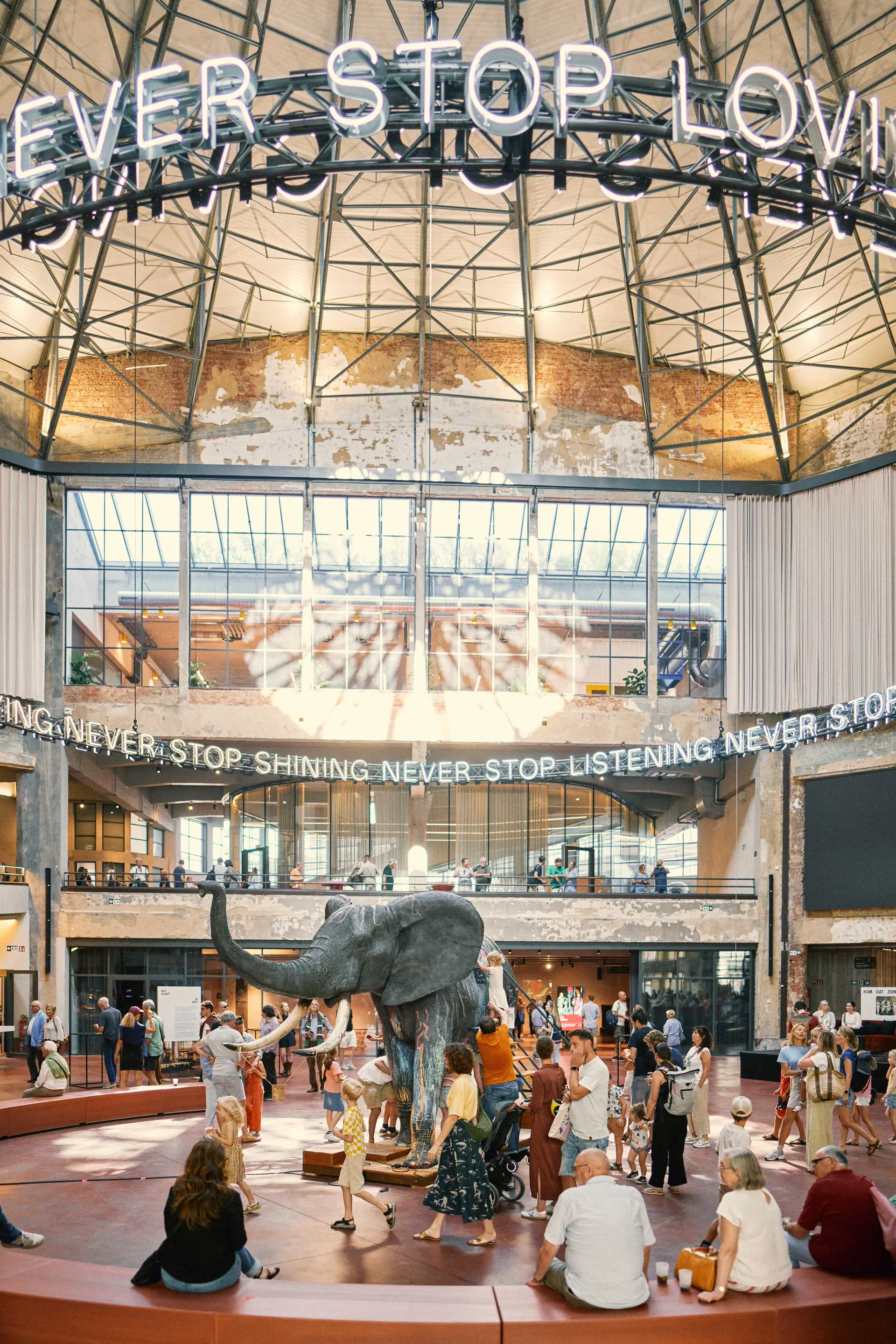
Tucked away in the heart of Ghent, Wintercircus is no ordinary office, it is a former 19th-century circus turned into one of Belgium’s coolest startup hubs. Think soaring iron columns and brick walls full of history and industrious character — now buzzing with developers, designers, and dreamers. After decades of silence, this gem has been reborn as a creative playground where tech innovators come to work, connect, and grow.
Wintercircus offers far more than just a desk. From flexible co-working zones and private studios to high-tech labs and sprawling event halls, the space adapts to whatever stage your venture is in. Home to over 50 startups, ranging all the way from AI to biotech and digital media, the campus thrives on collaboration. Regular workshops, investor meetups, and mentorship programs turn chance encounters into real opportunities. Whether you’re a solo founder or a growing team, Wintercircus gives you the tools, community, and visibility to take your ideas further, faster.
While Wintercircus is a launchpad for entrepreneurs, it’s also a destination for the curious. Throughout the year, the campus opens its doors for demo days, cultural events, panel discussions, and public gatherings — inviting anyone and everyone to peek inside the engine of Ghent’s innovation scene. By transforming a historic circus ring into a ring for ideas, Wintercircus proves that the best way to honor the past is to reinvent it for the future. Come for the architecture, stay for the energy, and leave inspired.
Then, what is this website?

This website and everything around it are proudly designed and built by the third-year informatics students of the University of Antwerp. This is our bachelor end project for 2025–2026, but don't expect a typical classroom exercise. Instead, we're taking full ownership of a real-world, large-scale project in close partnership with Wintercircus, Ghent's historic startup campus. Our mission is simple: build a robust, production-ready platform that actually helps the Wintercircus community, while showing off our technical and people skills.
Unlike traditional academic projects, We act as a real development team, autonomous and driven, responsible for everything from gathering requirements and planning sprints to deployment and maintenance. We lead ourselves, every tech choice, test strategy, and deadline is on us, with support from faculty coaches and regular feedback from the Wintercircus team. That means we are fully accountable for the final product: how it performs, how easy it is to use, and whether it lasts.
Real‑world collaboration · Student‑led development · Wintercircus Ghent ·
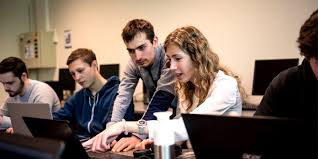
This project is a rich playground for modern computer science disciplines. We are integrating AI systems to enhance Wintercircus operations. On the web front, we develop responsive, accessible interfaces using modern frameworks that connect to robust backends and databases ensuring fast, reliable data storage and retrieval.
But here's the best part: we get to do this for real. Not a fake assignment, not a throwaway prototype. We're handling security, privacy, and reliability from day one — because actual people will depend on this system. That means real pressure, real responsibility, and real growth for us as young developers. By the end of this project we'll have shipped a product, ready to make a difference.
Our Goal? Simple.
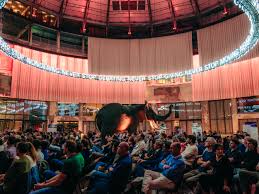
Wintercircus is more than a venue. It's a living, breathing space where thousands of people cross paths every day. Our goal is to understand that flow: who comes, when they come, what draws them in, and what keeps them. Not out of curiosity alone, but because that knowledge shapes everything from how the space is programmed to how it evolves over time.
By combining computer vision, real-time analytics, visitor surveys, and audience polling, we build a picture of Wintercircus that no single dataset could capture on its own. Organizers can make decisions grounded in reality.
Why do we use AI?
Watching cameras is tedious work. Counting heads, tracking movement, logging where people gather and for how long: these are tasks that would demand a person's full, undivided attention, hour after hour, day after day. AI takes that burden off human shoulders entirely. It does the watching so that the people running Wintercircus can focus on what humans are actually good at: interpreting, deciding, and creating.
Where is AI in this system?
At the edges and at the core. Computer vision models analyze live camera feeds to detect and track visitor movement, anonymously and ethically, giving us crowd density, dwell times, popular zones, and flow patterns throughout the venue. No faces stored, no identities tracked. Just motion, translated into meaning.
Downstream, those signals feed into dashboards that help organizers ask better questions: Which installations captivate people longest? Where does the energy concentrate on a Saturday night? What does a record-attendance evening actually look like, movement-wise? AI doesn't answer these questions for us.It makes them answerable.
What about privacy!?
You have rights.

What does this system actually see?
Beyond what the law requires, we go further, because good intentions need good engineering to back them up. Video frames live in memory for the shortest time physically possible. The moment a frame is captured, a clock starts ticking. It is processed, analyzed, and discarded. Swiftly. And while a frame is in transit, it does not travel exposed: every frame is encrypted end-to-end as it moves through the network, meaning that even in the unlikely event of an interception, there is nothing readable on the other end.
But the most important protection happens before analysis even begins. Every frame passes through an anonymization stage first. Faces blurred. Features obscured. Identities erased. By the time any model sees the image, there is no person left to identify. What gets analyzed is a silhouette, not a someone. And once that analysis is done, the frame is dropped. Not compressed. Not archived. Gone.
Taking a closer look

Every day, Wintercircus fills with people making choices: where to linger, what to look at, which corners feel alive and which feel forgotten. That behavioral information is extraordinarily valuable to anyone trying to make the venue more compelling, yet it has always been nearly impossible to collect in any systematic way. This system exists to change that, to surface what was always there but never legible, and hand it to the people who can act on it.
Computer Vision · Anonymization · Security · Encryption ·
The starting point is infrastructure that already exists. Wintercircus's existing camera network, installed long before this project began, now serves a second purpose. Alongside their original function, these cameras feed a live stream into the anonymization pipeline, with no new hardware required and no additional presence on the floor.
Each anonymized stream is passed to a computer vision model. Systems purpose-built for one task: determining where people are standing within a frame. Not who they are, not what they look like. Just position. The model produces a spatial read of the room, moment by moment, and nothing more.
That positional data is immediately converted into lightweight events and sent downstream. The frame itself, having served its only purpose, is dropped at this stage and purged from the system entirely. What travels forward is signal: timestamped, location-tagged, and stripped of anything visual. Downstream, these events are aggregated and compiled into the numbers and patterns that actually mean something to the people running the venue.
Those numbers find their final home on a dashboard built for Wintercircus staff. Readable at a glance, actionable by design. For the people who program the space, plan the events, and decide what happens next. A place to ask questions, spot patterns, and make Wintercircus a little better informed with every passing week.
So, what is happening in wintercircus now?